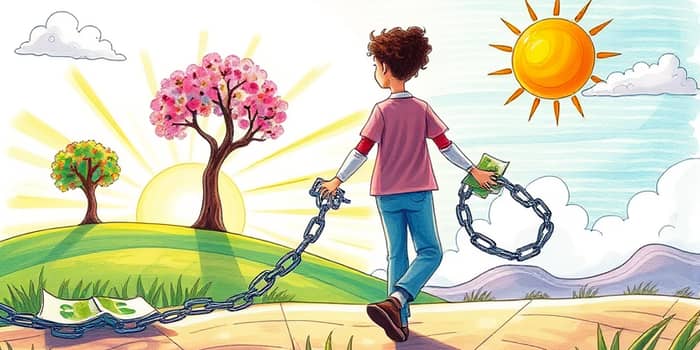
Finding a path out of debt can feel like seeking an escape hatch in a locked room. Yet with knowledge, discipline, and the right strategies, you can break the chains of financial stress and build a foundation for lasting freedom.
Understanding the Debt Trap
The concept of a debt trap describes a scenario where financial obligations consistently outpace your ability to repay. When monthly payments cover interest rather than principal, you borrow more simply to stay afloat.
Several factors contribute to this vicious cycle:
- Spending more than you earn and relying on credit or loans to fill the gap.
- Continual use of new borrowing to pay off existing debts.
- High-interest rates causing payments to service interest instead of principal.
- Predatory lending practices by unregulated lenders, which can worsen the situation.
Recognizing how you fell into this pattern is the first step toward designing your own escape hatch.
The Scope and Impact of Debt
In the United States, consumer debt levels have soared to record highs. By 2025, total household debt is estimated to exceed $18 trillion. Mortgages, auto loans, credit cards, and student loans all play a role.
The human consequences are equally alarming. Chronic indebtedness can lead to damaged credit scores, limited borrowing ability, and significant psychological stress, including anxiety and depression.
Debt settlement programs demonstrate both possibility and limitation. While 74% of participants settle at least one account within three years, only 23% clear all debts in that timeframe. These figures underscore the importance of choosing strategies wisely.
Warning Signs You’re in a Debt Trap
Early detection can prevent deeper entanglement. Be alert to these red flags:
- Needing to borrow simply to make monthly payments.
- Making only minimum payments on credit cards.
- Regularly incurring late fees or penalties.
- Frequent use of payday loans or other high-interest products.
If these signs feel familiar, it’s time to pause and design a clear escape plan.
Escaping the Debt Trap: Proven Strategies
Breaking free from debt requires a structured approach. Below, we outline six key pillars for your debt escape hatch.
A. Assessment and Awareness
Begin with a comprehensive debt review. Create a list of every balance, interest rate, and minimum payment. This simple exercise brings clarity to what you owe.
Next, implement a rigorous budgeting system. Track every source of income and all expenditures. Allocate funds for necessities, savings, discretionary spending, and debt service. Finally, calculate your Debt-to-Income Ratio (DTI). Aim to keep monthly debt payments below 40–50% of gross income.
B. Debt Repayment Methods
Selecting the right payoff method can accelerate your progress. The table below outlines popular approaches:
C. Emergency Measures
When debt feels overwhelming, you may need immediate action. First, stop taking on new debt. Cut up credit cards if necessary and freeze discretionary spending.
Next, scrutinize your expenses. Cancel non-essential subscriptions, reduce luxury purchases, and cook at home instead of dining out. Simultaneously, seek ways to increase income with side gigs—freelance work, part-time jobs, or selling unused belongings can generate quick funds.
D. Professional Help
Sometimes, expert guidance can make all the difference. Nonprofit credit counseling agencies negotiate lower rates, waive fees, and help you establish a realistic repayment plan. For complex situations, a certified financial counselor or advisor can provide emotional support and long-term strategies.
E. Consolidation and Refinancing
Consolidation loans merge multiple debts into a single monthly payment, ideally at a lower interest rate. Balance-transfer credit cards offer promotional interest-free periods, while refinancing replaces existing loans with new terms, effective when broader interest rates fall.
F. Negotiation and Settlement
Reach out to creditors for hardship adjustments or rate reductions. Many lenders are willing to negotiate when they know you’re committed. Debt settlement firms may offer lump-sum negotiations, but be mindful of fees and potential credit impact.
Prevention: Staying Free Once You’ve Escaped
The ultimate goal is not just to clear debt, but to prevent future entrapment. Maintain an emergency fund of 3–6 months’ expenses in a separate account. Continue financial education—read books, follow reputable blogs, and attend workshops.
- Live within your means; avoid lifestyle inflation.
- Regularly review and adjust your budget.
- Set SMART goals for spending and saving.
Special Considerations
Student loan debt remains a national concern, requiring specific repayment plans and sometimes forgiveness programs. Be wary of unlicensed lenders offering quick fixes—always verify credentials and transparency.
For business or complex debt, restructuring negotiations can prevent insolvency and preserve relationships with creditors and investors.
Psychological and Social Dimensions
Debt stress can strain relationships and impact mental health. Behavioral finance teaches us that quick wins provide lasting motivation. Celebrate milestones—every small balance paid is progress.
Practical Tools and Resources
Numerous apps and online tools can support your journey:
- Budgeting apps to track expenses and visualize spending.
- Debt calculators to model payoff timelines and interest savings.
- Nonprofit credit counseling organizations, such as NFCC affiliates.
Key Takeaways and Action Steps
Begin with self-assessment: inventory debts, calculate your DTI, and select a repayment strategy that aligns with your personality and goals. If you need extra support, enlist a credit counselor or financial advisor.
Commit to lifestyle adjustments: live below your means, cultivate an emergency fund, and avoid high-interest debt in the future. By setting SMART goals and celebrating progress, you’ll transform debt from a crippling burden into a conquered challenge.
Your financial freedom is within reach. The escape hatch is open—step through it with confidence, discipline, and optimism.
References
- https://www.cbsnews.com/news/what-is-the-success-rate-of-debt-settlement/
- https://www.miraeassetfin.com/blogs/personal-loans/breaking-the-cycle-how-to-avoid-and-escape-debt-traps.html
- https://valexfcu.org/mastering-debt-management-strategies-stay-top
- https://consumer.ftc.gov/articles/how-get-out-debt
- https://extension.wvu.edu/youth-family/finances/blog/2025/04/01/smart-strategies-for-effective-debt-management
- https://www.tombiblelaw.com/blog/2022/october/types-of-debt-traps-and-how-to-avoid-them/
- https://www.amerantbank.com/ofinterest/debt-management-strategies-for-financial-freedom-2025/
- https://finred.usalearning.gov/Money/DebtTraps
- https://www.westernsouthern.com/personal-finance/debt-reduction-strategies
- https://freed.care/blog/understanding-and-escaping-debt-trap
- https://8020consulting.com/blog/debt-management-strategies-for-a-high-interest-rate-world
- https://www.nea.org/nea-today/all-news-articles/making-student-debt-crisis-explained
- https://www.naccacpas.com/blog/5-moves-to-make-to-get-out-of-debt