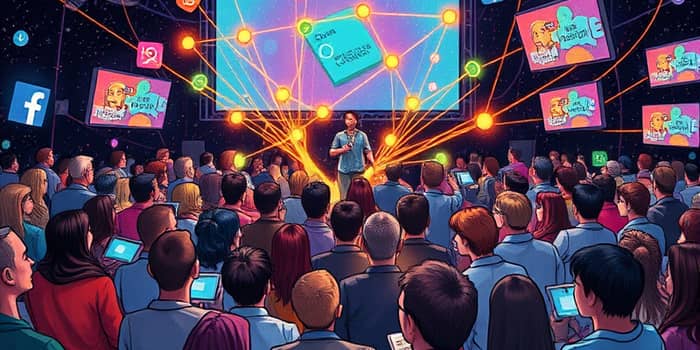
In today’s crowded digital landscape, brands must rise above the noise to be heard. Digital storytelling offers a way to forge genuine bonds, inspire action, and leave a lasting impression.
Introduction to Digital Storytelling
At its core, digital storytelling refers to the strategic use of narrative techniques—combining text, visuals, video, data, and interactive elements—to convey a brand’s identity.
Grounded in psychology, this approach leverages emotion to cut through digital noise and make messages resonate on a deeper level.
The Business Case: Numbers and ROI
Brands that embrace storytelling see measurable impacts across the funnel. Consider these key figures:
Additional data underlines the power of narrative: 92% of consumers want ads to feel like a story, and story-driven ads are 22 times more memorable than fact-based campaigns.
Moreover, customers who connect emotionally with a brand achieve a 306% higher lifetime value, while storytelling boosts loyalty by 55%.
How Digital Storytelling Works
Scientific studies reveal people remember only 5–10% of raw facts, but retain 65–70% when information is woven into a narrative.
Stories activate common brain regions across cultures, highlighting their universal appeal and effectiveness—an advantage for global brands.
- Video-first formats increase engagement by 1200% compared to static images and text.
- Interactive features (like Instagram Stories) draw 500+ million daily views.
- Email campaigns that tell a story generate five times higher click-through rates.
By showcasing real customer success stories, brands build authenticity and trust, further reinforcing their narrative.
Brand Value and Differentiation
Emotional resonance trumps transactional messaging. Brands that humanize their offerings—sharing genuine experiences and values—stand out in a sea of sameness.
For instance, Nike’s “Just Do It” campaign centers on perseverance and empowerment, not just shoes. This focus on purpose transforms customers into loyal advocates.
Influencers and user-generated content amplify these authentic stories, generating up to 22 times more shares.
2025 Digital Marketing Context
The digital marketing environment in 2025 is marked by intense competition for attention:
- Global digital ad spending is projected at $715–$740 billion.
- Mobile traffic will account for 60.9% of website visits.
- Content marketing remains 62% less expensive but yields three times more leads than traditional methods.
Social commerce is set to hit $1 trillion by 2028, while 97% of B2B marketers leverage content marketing, and 70% increase their investments year over year.
Best Practices for Story-Driven Success
To stand out, tailor narratives to each platform’s strengths:
- On TikTok, craft short, authentic videos that highlight behind-the-scenes moments.
- On Instagram, use swipeable carousels and Stories to build a serialized narrative.
- On YouTube, produce longer-form content that dives into brand heritage and customer journeys.
Track performance through click-through rates, viewing time, shares, and conversions. Use these metrics to refine your story arcs over time.
Building Trust and Personalization
Consumers crave authenticity. They expect brands to reflect real values and demonstrate genuine purpose.
Personalized narratives—crafted with customer data—deliver dramatically enhanced customer experience. When stories align with individual needs, engagement soars.
Internally, leaders who tell compelling stories are seen as 20% more effective, improving team alignment and cascading a customer-centric culture.
Future Trends in Digital Storytelling
As AI and automation evolve, 75% of data-driven narratives will be auto-generated by 2025, blending scale with creative flair.
Marketers will leverage powerful data-driven storytelling techniques to connect numbers to real outcomes and shape audience perceptions in real time.
Hyper-personalized, story-based content—fueled by machine learning—will set new standards for relevance and emotional impact.
Action Steps and Recommendations
To capitalize on storytelling’s power, marketing teams should:
- Invest in video production and interactive tools.
- Develop skills in narrative design, data visualization, and emotion-driven copywriting.
- Establish cross-channel story consistency for a unified brand voice.
Ultimately, brands that master the art of storytelling will not only capture attention, but also build lasting relationships, driving loyalty and long-term growth through AI-driven narrative generation at scale.
References
- https://theloopmarketing.com/digital-marketing-statistics/
- https://www.amraandelma.com/storytelling-marketing-statistics/
- https://www.typeface.ai/blog/content-marketing-statistics
- https://www.businessdasher.com/storytelling-statistics/
- https://www.sprinklr.com/blog/social-media-marketing-statistics/
- https://papers.ssrn.com/sol3/papers.cfm?abstract_id=5201867
- https://www.hubspot.com/marketing-statistics
- https://exadel.com/news/storytelling-in-digital-marketing/
- https://www.deloitte.com/us/en/insights/industry/technology/digital-media-trends-consumption-habits-survey/2025.html
- https://bima.co.uk/the-power-of-storytelling-turning-data-into-compelling-marketing-narratives/
- https://seoprofy.com/blog/digital-marketing-statistics/
- https://vwo.com/customer-engagement/customer-engagement-statistics/
- https://marketingltb.com/blog/statistics/storytelling-statistics/
- https://www.deloittedigital.com/nl/en/insights/perspective/marketing-trends-2025.html